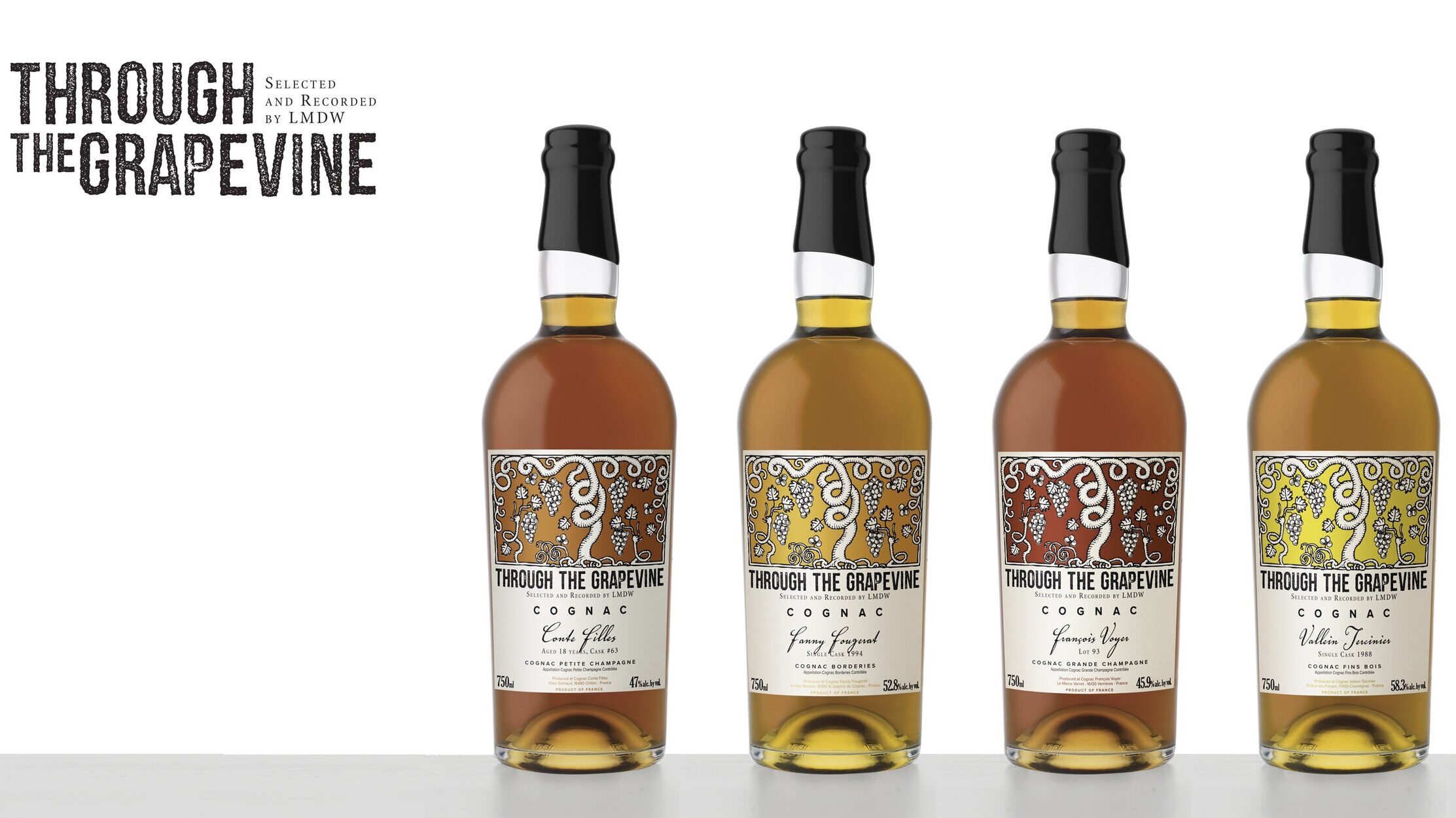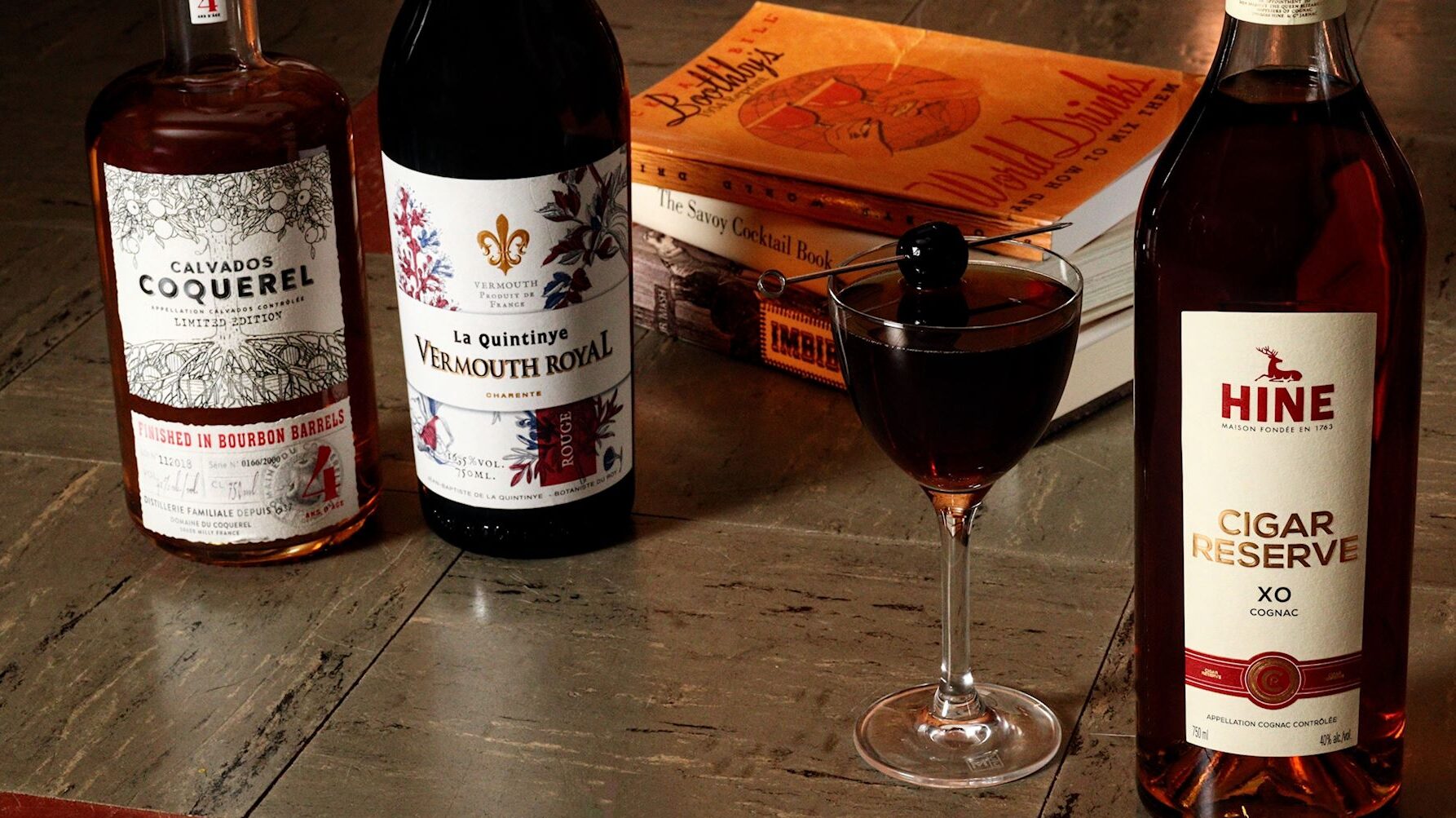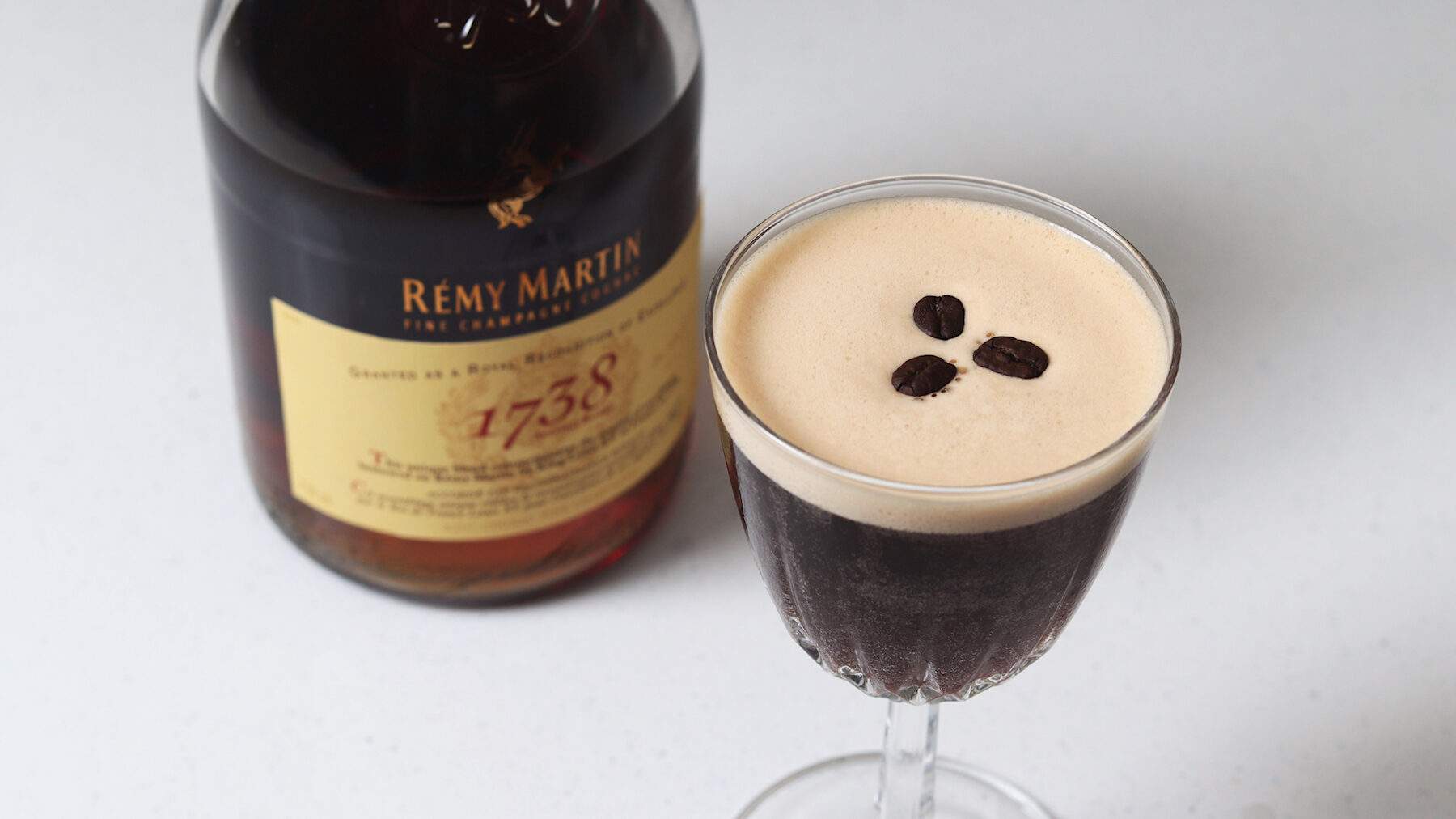
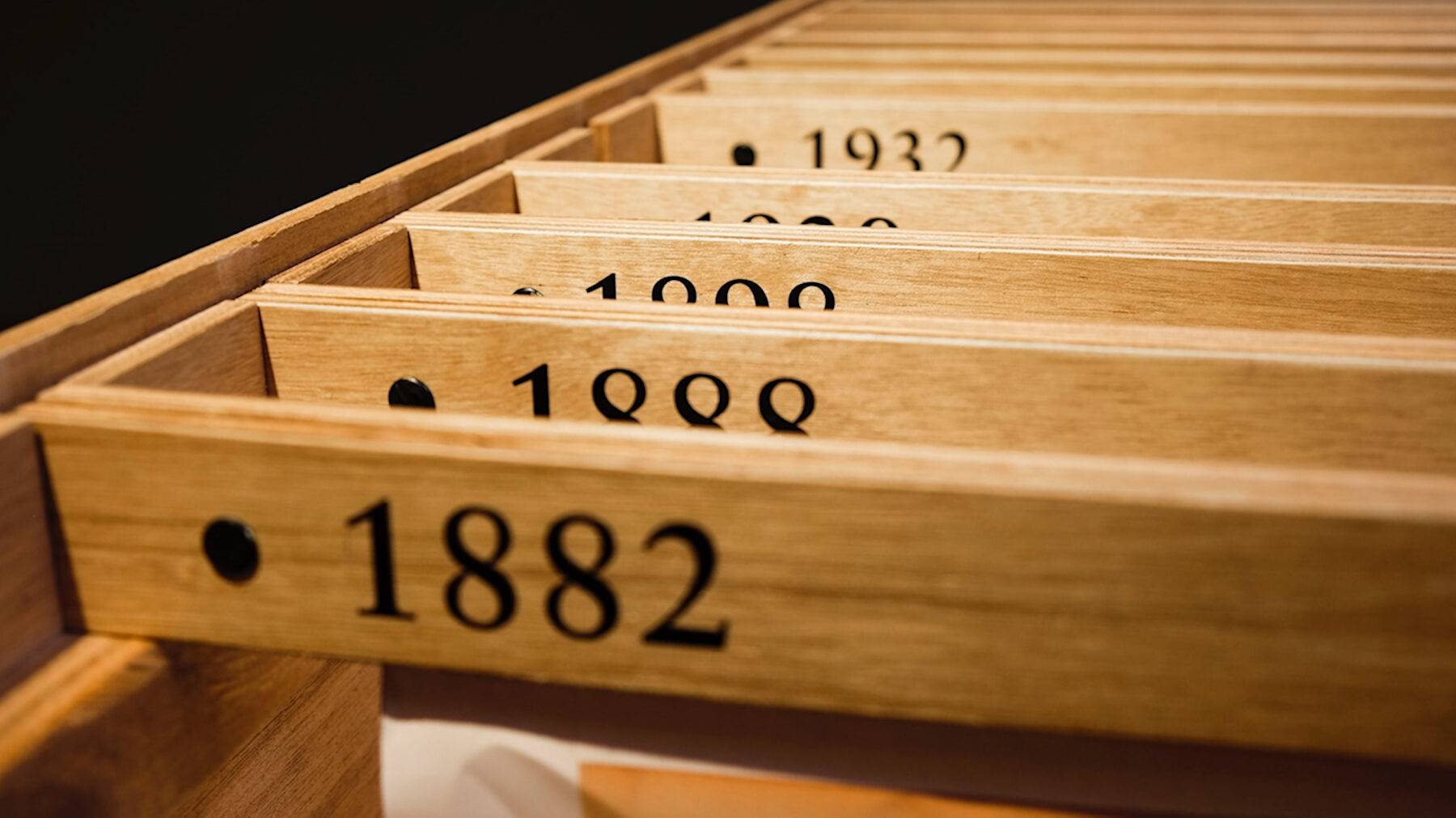
Not too long ago, understanding a whiskey’s age was simple. Many producers printed the number right on the label. The core ranges for most Scotch distilleries—12, 15, and 18 years—remain the same today. For years, American bourbon and rye proudly displayed age statements too, but as demand grew and the culture shifted, producers began stepping away from that approach. They now use terms like “small batch” and “single barrel,” expressing age in ranges rather than absolutes. Cognac follows a similar pattern, though it has always done so.
With a few exceptions, you won’t ever see a concrete number regarding age on any Cognac label, but instead a combination of letters and words. It can be challenging to understand what exactly you’re looking at on a label when it comes to Cognac and it doesn’t help that several terms are fairly vague with no firm definition. If you finish reading this and are still left with questions, you’re not alone. My hope with this is that I can shine some light on the path for you and point you in the right direction. But before diving head first in to the meat and potatoes, we first need to understand the basics. There are only four official age classifications for Cognac and they are VS, VSOP, XO, and the newly created XXO.
VS (Very Special)
A VS Cognac must age in barrels for at least two years—the minimum required to qualify as Cognac. Anything younger can’t legally carry the name. You might see other names on a bottle that also mean VS like “Trois Etoiles” (Three Star), “Sélection,” and “De Luxe.” Also, if the only thing you see is an image of three stars, then it’s a VS.
These Cognacs are usually full of fresh, juicy fruit flavors like apples, pears, and tropical fruits. A stereotype is that they’re a little one note and lack finesse, but that definitely doesn’t have to be the case at all. In general, bartenders and drinkers use VS Cognac for cocktails. It really shines in long drinks like a highball—Cognac with soda water, tonic, or similar mixers—where its flavor unfolds gradually. Cooking with a VS is also a great idea. Deglazing frying pans, reducing to make a syrup for desserts, or soaking fruits in it to then caramelize are really tasty options.
VS is the most sold Cognac category in the United States. It has found great success in nightclubs due to the fact that the late 90’s and early 00’s hip hop community loved to sing about drinking Cognac in many of their songs. This attention boosted sales and helped introduce a new generation of drinkers to Cognac.
VSOP (Very Superior Old Pale)
A VSOP age means the eau-de-vie has been in barrel for at least four years. Other names that mean the same thing are “Réserve,” “Vieux,” and “Royal.” Some might even call it Very Superior Special Pale. And some also choose to use V.S.O.P. vs VSOP without the fullstops. Neither is wrong, but just a stylistic choice.
The name itself, Very Superior Old Pale, comes from the British Royal Court in 1817. King George IV had asked Hennessy to provide him with a Very Superior Old Pale to enjoy. Very Superior meaning of great quality, better than others. Old meaning aged, but not really any specification on number of years at that time. And Pale meaning that no additives be used like caramel coloring or sugar. The British preferred a drier style of Cognac, which is still true somewhat to this day.
VSOP Cognacs are also great for use in cocktails, but more so shaken and stirred classics like a Sidecar or Sazerac. They’re also great to enjoy on ice. They start to incorporate a bit more baking spices and sweetness from the barrel as well as some floral notes depending on the cru it comes from.

XO (Extra Old)
An XO Cognac must be in barrel for at least 10 years as of April 1st, 2018. Prior to that it was only six years. It’s still possible for an XO to only be six years old in the current market as long as it was finished aging prior to April 1st, 2018. However, the majority of XO’s are well over that age anyway. There are many, many other names and terms that also mean XO such as “Hors d’âge,” “Extra,” “Ancestral,” “Ancêtre,” and “Impérial” among others. While all of these names are also XO’s, some do have specific qualifications in terms of quality or age which we’ll touch on in the next blog post.
While King George IV inspired the creation of VSOP and Hennessy popularized it, Hennessy actually coined and introduced the term XO in 1870. Many houses are judged by their XO; if you want to understand what a producer stands for, start there.
These Cognacs reveal real finesse through notes of dried fruits, flowers, and earthy tones. An XO Cognac is best enjoyed neat, though some prefer it over ice or, occasionally, in cocktails. Purists might frown at that, but I’d never turn down an XO Old Fashioned!
XXO (Extra Extra Old)
In 2018, a new age classification became official: XXO Cognac must age at least 14 years. Like XOs, which often exceed their 10-year minimum, XXOs usually far surpass 14 years. The alternative naming conventions used for XO can also apply to XXO, but labeling a Cognac as XXO mainly serves a marketing purpose, highlighting it as an “ultra-premium” spirit. Skipping the XXO label in favor of an alternative name makes little sense from a marketability standpoint.
The approval of this new age statement was a big deal. The age requirements and labeling system had barely changed since the early 19th century, with VS, VSOP, and XO officially recognized by the BNIC as the only age categories in 1983. Who pushed for the new classification? Hennessy. The brand showed it had produced an XXO as early as 1872, before strict age regulations existed. Although production stopped in the 1930s, Hennessy wanted to revive the category. After much debate and support from other brands, the motion passed, making the category official. Today, many Cognac houses take advantage of it.
How Is Age Calculated?
A friend once asked whether Cognac’s age starts counting after distillation or when it enters the barrel. Technically, it’s neither! This is due to a quirk called the ‘compte system.’ Cognac production is allowed only from October through March each year. After March 31st, distillation must pause until the next season. If you harvest and distill in October or November and barrel the spirit immediately, aging begins, but by law, its official age doesn’t start counting until April 1st.
The BNIC uses the compte system to track aging in the region. Starting April 1st, a new eau-de-vie—whether barreled in November or on March 31st—is counted as compte 0. On the next April 1st, it becomes compte 1, and the count continues. For example, an eau-de-vie barreled in November 2019 is already four months old by April 1st, 2020, but the law counts it as only one year old. Two years later, on April 1st, 2022, it’s officially two years old; those extra months don’t count.
The scale goes up to compte 10, at which point the Cognac is considered XO, and all subsequent aging also falls under XO. The same applies to XXO, though whether this might extend to compte 14 in the future is uncertain.
Age of a Blend
Something else to keep in mind here is that just because the label says VSOP, it doesn’t mean it’s four years old, period. Just like with the labeling of other spirits, it means the youngest aged Cognac in the blend is four years old. There could potentially be much older Cognac in the bottle. In fact, it’s very much common place for producers to do this.
Many producers will proudly tell you that their VS includes some six- or eight-year-old cognac. Usually, the inclusion of these older eaux-de-vie make up a small portion of the blend, but they’re present nonetheless. If a blend averages 10–12 years but includes even a tiny amount of four-year-old Cognac, the law requires it to be labeled VSOP, even though most of the blend is XO quality. Why do this? It’s all about the house style—what flavor profile they aim for, which cru the blend comes from, and what they want to highlight in this expression. This is why the Cellar Master is truly an artist in crafting these blends.
Now you’ve got a great general understanding of age statements for Cognac. With this information, you’re already well ahead of the general consumer in understanding this spirit. But, of course, there’s always more to learn. In Part II of ‘Age Is But A Number,’ we’ll dive deeper into more advanced subcategories of age. At the bottom of this page you’ll find a form that you can fill out to become a subscriber. You’ll be notified whenever a new post goes up. Don’t miss out!