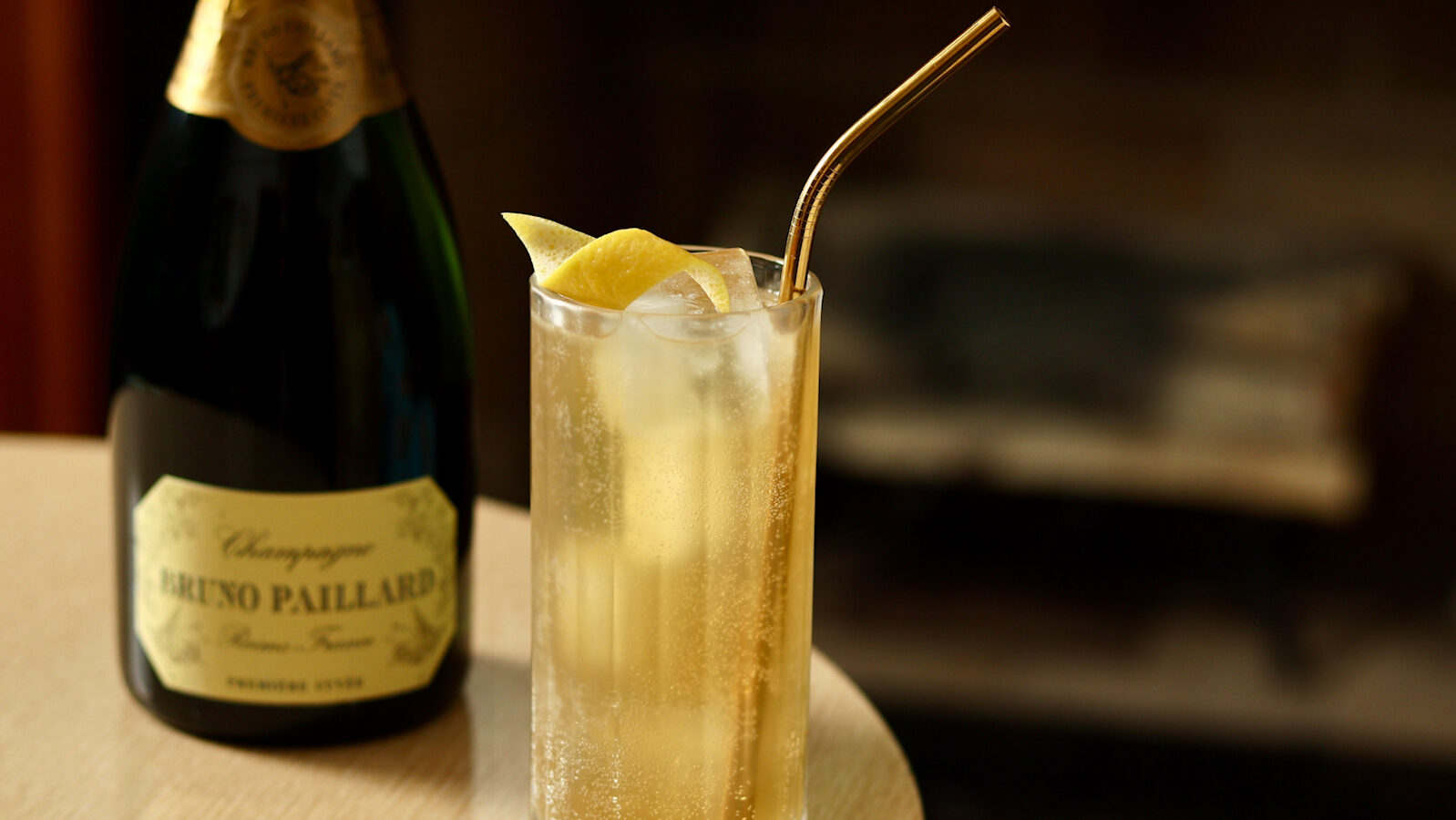
So far on Cognac Reverie, every cocktail we’ve explored has a fairly clear history. We usually know who created it, when it was made, and the story behind it. Today, we’re diving into a cocktail with a much murkier past: the French 75.
The Lore
Before we get into this, one thing must be clarified: the French 75, as we know it today—and for most of its history—has been a gin-based cocktail. The most common story is that British soldiers during WWI invented it, naming it after the powerful French 75mm artillery gun that helped win the war. Supposedly, soldiers on the battlefield mixed together whatever ingredients they had and even drank it from 75mm shells.
Exciting as that sounds, it’s a bit hard to believe. Gin and Champagne? Sure. Those were almost certainly available. But lemons and sugar during wartime? Unlikely. Drinking out of an artillery shell? I’d definitely be passing on that. Imagine the chemical and metallic taste!
Early History
The first printed mention of the French 75 as we know it today wasn’t until 1927 in a New York magazine, right in the middle of Prohibition in America. The 1930 Savoy Cocktail Book also includes it, but neither mentions cognac—always gin.
To understand the origins, we have to look even further back. In the mid-19th century, there was a popular drink called a Champagne Cup: the sparkling wine, citrus, and sugar over ice. According to cocktail historian David Wondrich:
“When Charles Dickens visited Boston, way back in 1867, he liked to entertain the literary lions of the town in his room at the Parker House with “Tom gin and champagne cups,” as an 1885 article about the hotel claimed.”
Liquor.com (https://www.liquor.com/articles/behind-the-drink-the-french-75/)
Where’s the Cognac?
At the same time, cognac was extremely popular in the British Empire and America, particularly among high society. Wondrich points out that “the combination of cognac and Champagne was just as well-known, if not more so,” citing a cocktail called ‘King’s Peg’ as an example. Given this, it’s easy to imagine that people might have added cognac to a Champagne Cup—much like Dickens added gin—long before the French 75 as we know it existed.
What the French 75 really shows is that this cocktail lived in various forms long before it had a name. Was it always gin? No. Cognac? Not necessarily. Most likely, it was made with whatever spirit was on hand. Whoever first gave it the name didn’t invent a new drink—they just gave it a label.
One more note: much like a Collins (spirit, citrus, sugar, soda water) or a Champagne Cup, early versions of the French 75 were served over ice. Today, we usually see it in a coupe or flute, but serving it tall over ice—as in the 19th century—is also perfectly valid. Just another option to try.
This is my go-to way to make a French 75. I like the version served over ice in a Collins glass, but if you prefer yours “up” in a coupe, I certainly am not here to stop you.
• • • • •
Cognac
For this cocktail, a VS or VSOP Cognac is your best bet. You want something bright, fresh, and lively to complement the Champagne and lemon juice. With so few ingredients, there’s nowhere to hide. Reach for something vibrant and fruity or floral.
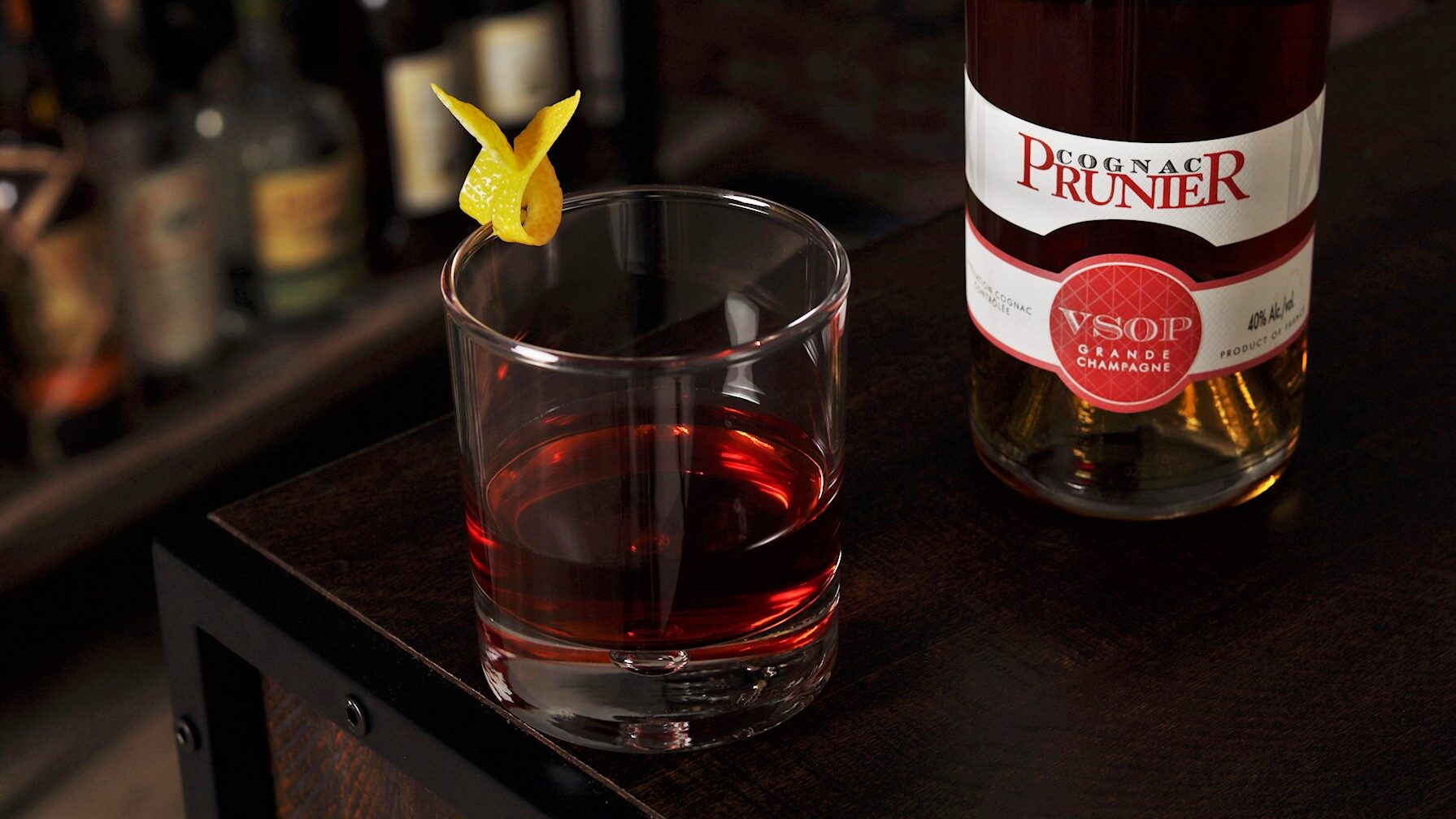
Readily available VS options for everyone would be something from one of the big producers. I tend to reach for Hennessy or Martell on cocktails in this realm. If you want to branch out, Prunier VS, Park Carte Blanche, and Meukow VS are all excellent choices that mix beautifully in a French 75.
Sugar
Pretty straight forward on this one, but I’m using a 2:1 simple syrup made with basic white cane sugar.
Champagne
As someone who loves both cognac and French wine, I live by the motto, “Anything’s better topped with Champagne.” Okay, maybe not anything, but you get the idea.
That said, I don’t ever expect anyone to use real Champagne in cocktails. It can be a fairly pricey addition. If you can swing it, fantastic. Pairing French brandy with true Champagne in this classic would be perfection. But for most of us, a good sparkling wine does the trick.
Choose something dry—look for labels that say Extra Brut or Brut Nature (Brut Zero). You can always adjust sweetness with simple syrup, but you can’t take sugar out of the wine. I always start with the driest sparkling I can find, then tweak the recipe from there. Cava is a great affordable option from Spain. Most are on the dry side.
My recipe uses 3 oz of sparkling wine, but you can tailor it to your taste. Want it lighter and more refreshing? Add more bubbles. Prefer it a bit stronger? Use less. The world’s your oyster.
Garnish
Stick to a lemon twist. It adds a bright, aromatic finish that perfectly complements the drink. Another great option is to use a grapefruit twist. This will add a nice splash of bitterness that also works well with the cocktail.
The Recipe
1.5 oz (45 ml) VS cognac
.75 oz (22.5 ml) lemon juice
.5 oz (15 ml) simple syrup
3 oz (60-90 ml) Champagne, chilled
Add all ingredients, except Champagne, into a tin and shake with ice until diluted. Add Champagne to the tin and then fine strain the cocktail into a Collins glass filled with ice. Garnish with a lemon twist.
• • • • •
BONUS RECIPE
I travel from time to time for work, and on a recent trip to Columbus, Ohio, I found myself sitting at the bar of a restaurant called The 698. While waiting for dinner and sipping a cocktail, I struck up a conversation with the man next to me—Jeffrey Wilson, a career chef who now runs his own catering and consulting company.
As we chatted, the topic of cognac came up (as it tends to with me). He mentioned that back in 1988, he was the chef at a Chicago restaurant called The Chestnut Street Grill. That year, the city hosted something called Cognac Week, running from September 26th to October 2nd, with a cocktail competition organized by the BNIC. Jeff decided to enter and ended up winning, which earned him a trip to Cognac, France.
Of course, I asked if he’d be willing to share his winning cocktail recipe with me so I could feature it on Cognac Reverie. Coming from a cocktail background myself, and having competed in plenty of contests, it felt like too much of a coincidence to hear his story and not pass it along. After all, the more we celebrate cognac together, the better.
Chef Jeff was happy to share his creation, The Lost Frenchman. It’s closer to a Champagne Cocktail than a French 75, but with cognac and Champagne together, I’m not going to argue semantics. If it has fancy bubbles and brandy, count me in!
The Lost Frenchman
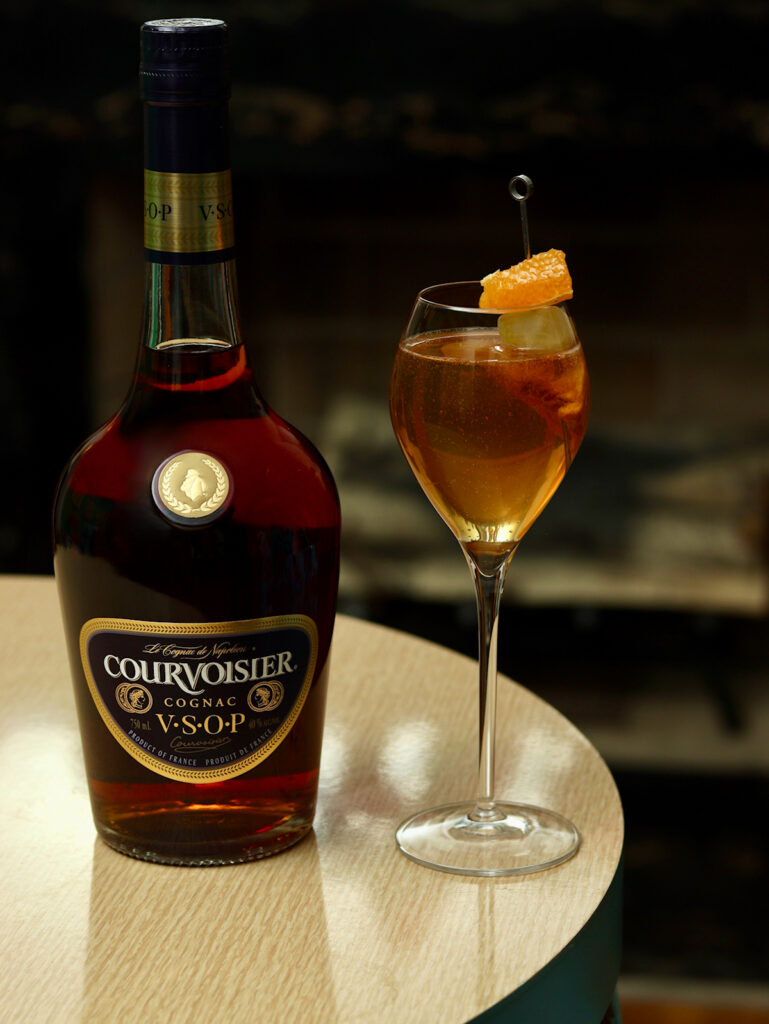
1 oz. (30 ml) Courvoisier VSOP
.25 oz (7 ml) peach liqueur
.25 oz (7 ml) triple sec
5 oz (150 ml) Champagne, chilled
Add all liquor into a mixing tin with ice. Pour in sparkling wine and immediately strain out into a Champagne glass. Garnish with the following on a pick:
1 peeled white grape
1 orange wedge, rind removed
1 fresh peach wedge
*Chef Jeff used Courvoisier VSOP in the original cocktail, so we’re staying true to that in the recipe above. I’m also using Giffard Pêche de vigne and Cointreau for the triple sec as that’s what I have on hand.*
The Lost Frenchman is an excellent pre-dinner sip or an easy crowd-pleaser to share while entertaining at home. The cognac adds depth and structure, while the peach and triple sec bring a subtle touch of fruity brightness. The garnish is thoughtfully done, using fresh elements that elevate the whole experience in the glass. Nicely done, Chef Jeff!