
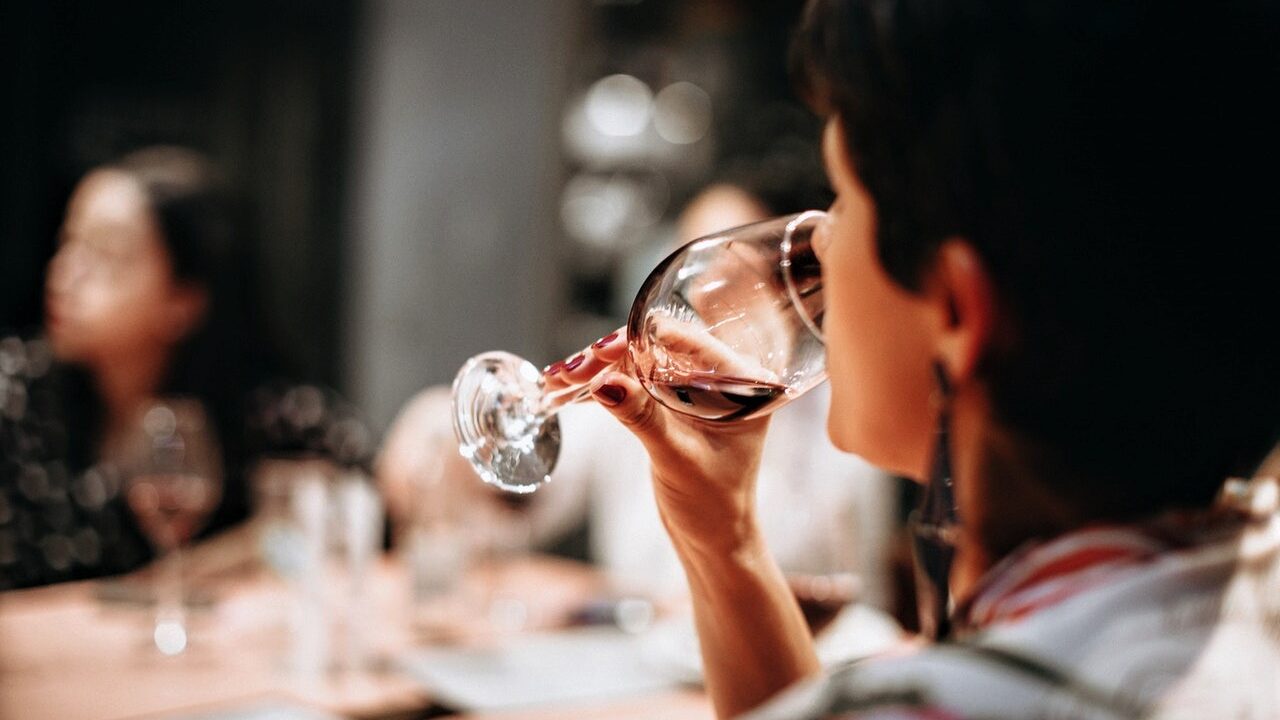
This is the million-dollar question. So many individuals, both amateur and professional alike, have their opinion on the best or proper way to taste a spirit. Essentially, all the methods are almost identical. You look at the color, smell it, and taste it. Preferred glassware and the depth of analyzation can vary, but that’s really about it.
When I first started tasting spirits (really tasting them, not just doing shots) I was definitely intimidated. What if I don’t have a good palate? What if I can’t smell all the things? This guy told me it has nice cinnamon notes, but I can’t find them so am I doing this wrong? Well, I have good news for you if you are asking the same questions of yourself as I did many years ago. Everyone can taste. Everyone can smell. There’s no such thing as a bad palate. Your palate and ability to identify flavors is unique to you and only you. Your worst enemy in tasting spirits is doubt. Trust your senses.
As an instructor once told me, “tasting is a personal experience. It’s not scientific.” I wish I would have heard that a lot earlier in my career. If there was a way to break down a spirit aroma and flavor scientifically and give it a value, then every beverage in the world could be explained by a finite list of flavors. Obviously, that’s not the case at all. Yes, there have been great studies on what flavors really smell and taste like on a molecular level. So much so that you can run a spirit through one of these machines and it will print out the notable compounds within it that correlate to a specific flavor. That’s pretty cool, but there is a problem with that.
Flavor is subjective. When you read a description on a bottle of wine at the liquor store and it has the tasting notes on it, those flavors are 100% the experience of the person who tasted it. You might not get any of what they said, or you may get it all. Either way, it’s totally okay. Your palate is just fine the way it is! Let’s break it down into a little bit more detail before we get to the actual steps of tasting a spirit.
Aromas and flavors are stored in the brain based on experiences, life events, or memories. An example is that someone might smell apples during a tasting, but I might smell my grandmother’s bathroom. Why would I be smelling that and what does it have to do with a spirit tasting? Well, maybe my grandmother always had potpourri in her bathroom that smelled like apples.
If you gave me an actual apple, I’d obviously recognize it as an apple because it’s right in front of me and my eyes can confirm this. But if I smell apple in my cognac, it might remind me of my grandmother’s bathroom because that memory has been associated with that specific aroma. Now, I wouldn’t put that description on a bottle since my guess is that it wouldn’t sell very well, but it doesn’t diminish the fact that the memories I have affects the way I process sensory information.

Let’s try another example. How would you explain to someone what a walnut tastes like? What kind of words would you use to describe it if that person has never had a walnut before? I doubt anything you tell them would be helpful. The best way would be to let them try a walnut and have them experience it for themselves. Now they’ve locked that flavor away in their brain to recall at a later time. I’ve been stuck very often nosing a glass and getting something that I just don’t know what it is. I’ve either never smelled it before or I can’t put my finger on it. How do I quantify that aroma?
Well, I pull something from a memory that’s similar. I might know what passionfruit smells like. You might not. So, when you smell it, you might say mango or more vaguely, tropical fruits. That’s the best you can do based off your personal memories and that’s absolutely fine when doing a tasting. No one knows what all the fruits smell and taste like in the world.
The age-old idea that we taste only with our taste buds and tongue is misleading. Yes, they play a role, but think of your mouth as a landing zone for flavors, aromas, and textures. Our noses perceive most flavor. From a technical standpoint, aromas translate into flavors. When a smell enters your nasal cavity—just below your eyes—it interacts with receptors and sends signals to your brain. The olfactory cortex, at the bottom of the frontal lobe, sorts out these signals.
As you smell, flavors and textures hit the taste buds on your tongue. While you eat or drink, your mouth releases aromas that travel through the roof of your mouth or up your throat to the base of your nose—this process is called retronasal olfaction. When you swallow, your throat, stomach, and intestines send signals from tiny receptors directly to your olfactory cortex.
That’s quite overwhelming just thinking about it. All of these different organs are flooding your brain with information to be processed. Your brain pulls the sensory memory it thinks it needs and asks for confirmation from your mouth and nose to agree with the conclusion it has drawn as to what flavor your tasting. So, since memories play such an important role, I strongly believe tasting is personal and only you can come to a final conclusion about what’s inside a glass.

For every review I do on Cognac Reverie, I’m tasting the exact same way. Below, I’ve listed each step of the process I go through when reviewing a spirit. Again, these are my personal preferred methods and in no way should be taken as the be all end all of spirit analyzation. These methods work best for me and I hope they help you find your way, too.
Before we jump right in, what you put your cognac in will matter during a tasting. I use a tulip glass every time. I feel it offers the best aromatics than any other glass. The tapered rim focuses the aromas towards your nose, but is still wide enough to not overload you with the alcohol vapers. I also enjoy this glass because of the stem. It’s easy to swirl and aerate the spirit to release more aromas. Giving the spirit some extra air helps to lift the more stubborn aromas up out of the liquid. Even leaving a glass to sit for five or ten minutes, then returning to it can show different notes that you didn’t notice before. Oxygen is a key element.
Some people like to warm the spirit up in their hands before tasting. I rarely do this and prefer to taste a spirit at room temperature. However, is just a personal preference. A word of caution, though: I highly discourage heating cognac, or any spirit, to taste on its own. Drastically increasing the temperature will concentrate the alcohol vapors in the glass. Once you put your nose in there, say goodbye to your olfactory sensors for the rest of the day because they just got fried. Yikes! With your glass of choice ready to go, let’s go through the steps of spirit evaluation.

• • • • •
Color
The first thing we check during a tasting is the color. As far as I’m concerned for a casual analysis, it always falls somewhere between yellow, orange, or brown, since aging in oak barrels gives cognac its color. We don’t deal with clear spirits on this blog—unless we discuss an unaged eau-de-vie, which is possible I might do at some point in time. Don’t get caught up debating shades—is it burnt orange or copper? Hay or marigold? Just flip a coin and pick one.
I’d only try to precisely assess a cognac’s color if I were professionally judging it in a competition. That said, notice this: if an XO appears unusually light, the producer might skip adding caramel coloring, or they may transfer the eau-de-vie to used barrels after a short time in new oak. It’s not an exact science, but it’s worth noting. Conversely, a darker VS or VSOP likely received added coloring or spent an extended period in new barrels.
Nosing
This is my favorite part. It’s time to get your nose in the glass. I spend almost twice as much time nosing a spirit than I do tasting it. This goes back to the aromas setting the stage for the palate. When you smell any alcoholic beverage, do NOT breath in through your nose exclusively. That will result in your sense of smell being wrecked as the alcohol vapors will burn your nasal receptors. Keep your mouth slightly agape and breath in through both the nose and mouth.
You also shouldn’t need to place your nose directly into the glass. Keep it by the rim or even a bit farther back. If it’s a good spirit, you’ll be able to start smelling it once you pour it out of the bottle, even from several feet away. If your nose gets fatigued, a great tip is to smell your shirt sleeve for a moment then go back to the spirit. The sudden shock to your nasal receptors of something completely different will regain your focus on the spirit. It’s kind of like a hard reset. This technique will eventually ware off, though, as your nose will start to anticipate it. Use it sparingly. Note the aromas you’re getting. Do you get sweet, floral, fruity, nutty? Be specific.

Image provided by BNIC, www.cognac.fr
Palate
Now we finally get to taste. Take a small sip and roll it gently around your mouth making sure it covers every part, gum line included. Swallow or spit, your choice, and then revisit again with another sip. The first sip will always be a bit off since your palate most likely has other flavors still lingering on it, whether from dinner or the previous spirit you tasted. Cover the inside of your mouth again, but this time suck a little air in and forcibly push it around. I wouldn’t call this “swishing it,” but it’s more aggressive than the original coating we did. Just like with swirling the glass, we want to get more aeration and oxygen into our mouths. Swallow/spit and take note of the flavors you’re experiencing just as you did with aroma. But also recognize texture like soft, light, heavy, spicy, velvety, bland, etc.
Finish
The last aspect is the finish, or aftertaste as some like to call it. Breath in a few times through the mouth and out the nose. What do you notice? Do the fruit notes linger? Does it dissipate immediately? Maybe something you didn’t taste before comes center stage and hangs out for a while. I’ve had spirits before that several minutes after I finish it, suddenly a flavor pops up in my mouth. Don’t be quick to dismiss anything. Take your time.
Water
This is an optional step, but if you’d like to add a little water to the spirit, do so now. Make sure you’ve completed all your tasting notes from the non-diluted spirit first. Once the water is added, start the entire process over as if it’s a brand-new spirit in your glass with the color, nosing, palate, and finish. Water can bring out different flavors by lowing the alcohol content, so it’s nice to try this method from time to time.
• • • • •
That’s my basic tasting technique. If another method works better for you, use it! I’ll end with this: the mind doesn’t naturally create descriptions for flavors it hasn’t experienced. Sometimes comparing two spirits feels easier than analyzing a single one. Ask yourself, “Why aren’t these the same? What makes them different?” You might be surprised—after nosing a spirit for five minutes, switching to another, and then returning to the first, it can be completely different. The mind plays all sorts of tricks on us.

I AM YOUR FIRST COMMENT!!!! Seriously though, this is a very in-depth and outstanding piece on tasting. Kudos.
You’re the first comment on the entire site! Thanks Anu! I’m glad you enjoyed the article.